CASE
Analysis & Reporting of Retail data using SQL and Dundas BI at Marketing Agency.
- This work aimed to analyse the effectiveness of marketing campaigns (email & SMS) for a retail/ecommerce client, using advanced data analysis techniques to uncover actionable insights
- The goal was to improve business-making by tracking KPIs
TOOLS & TECHNOLOGIES USED
The work utilised the following tools…
- Microsoft SQL: for data extraction and data transformation
- Dundas BI: for data visualisation
- SSIS (SQL Server Integration Service): for building data pipeline
- SSaS: for building a statistical modelling
WORKFLOW
- Extract, Transform, Load (ETL) process using SSIS: from dataware house, tranform
- Data cleaning and wrangling: dealt with data anomalies
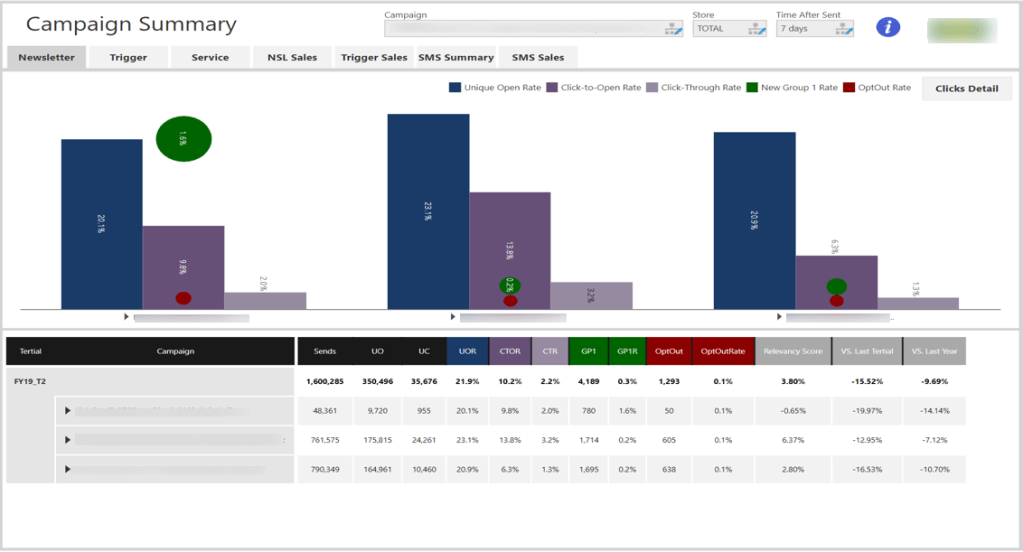
- Marketing campaign analysis: analysed the effectiveness of marketing campaigns (email & SMS) and tracked KPIs such as CTR, conversion rate, active members, Spend uplift
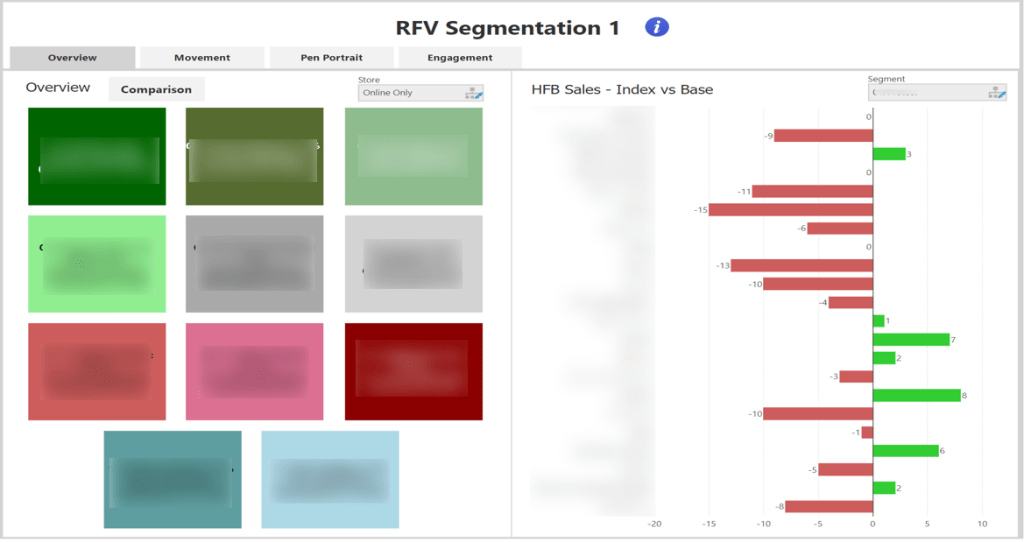
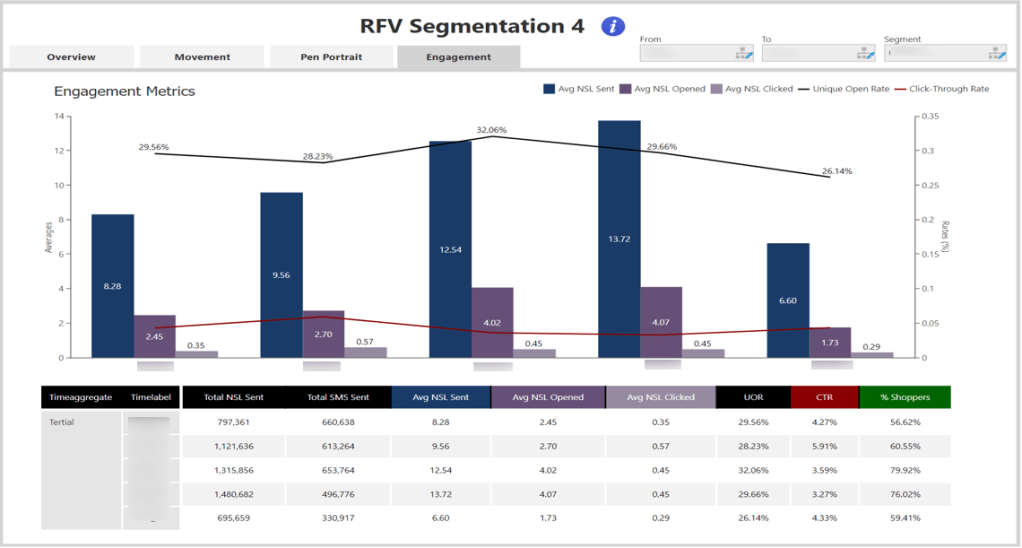
- BI tool (Dundas): Created dashboards that visualised the most effective marketing channels and customer engagement patterns
RESULTS & IMPACTS
In this work, I focused on analyzing key performance metrics such as conversion rates, click-through rates (CTR), active members, and spend uplift for IKEA’s marketing campaigns. In addition, I conducted a competitor analysis using logistic regression, Food buyer analysis and RFV segmentation analysis.
- Competitor Analysis: I conducted a predictive analysis using the logistic regression analysis about the impact of local competing stores of IKEA in Russia, upon customers’ purchase behaviours. We looked at the customers transaction history and segmented customers by their demographic information and conducted a logistic regression including variables such as distance to each store from their house. As a result, we found that IKEA Russia was being threatened by the competitors’ presence thus we recommended to take more aggressive marketing strategies, such as increase communication with customers who were at risk to turning to competitors’ store. This was predicted to provide 5% of retention in customers who would otherwise go to a competitor.
- Food buyer analysis: I also worked on comparing the buying behaviour between food buyers and non-food buyers, food buyers are defined as customers who purchase food and also purchase from stores or those that buy food only. I looked at their purchase history and profiled them based on their demographic information such as gender, age, location, and tenure year. As a result, it was found that food buyers actually spend less overall even though they visit the store more often. We recommended to analyse further looking at different spending patterns of those that eat when they arrive at the store or before they leave the store.
EXAMPLE – Dundas BI
 Hyesoo Park - Freelance Data Analyst & Automation Specialist